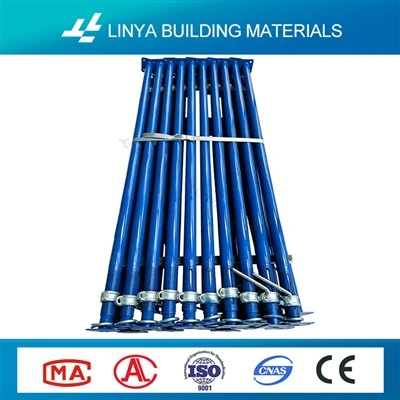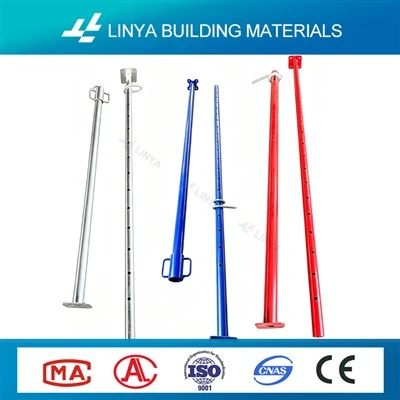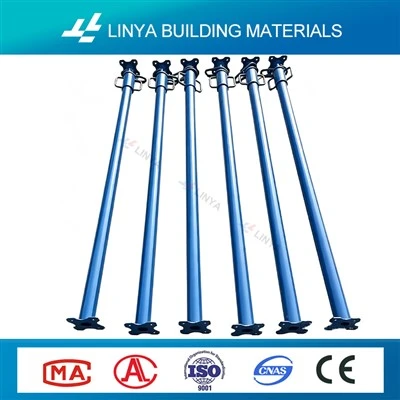
Carbon Steel Supports
Carbon steel is the most common material for steel supports, typically using Q235B, 20#, and 35# carbon steel, which offers advantages such as high strength, good toughness, and low cost. Furthermore, carbon steel supports have good plasticity and machinability, making them suitable for simple support structures. However, carbon steel has poor corrosion resistance and is prone to rusting in humid environments, requiring protective measures.
Alloy Steel Supports
Alloy steel has higher strength and toughness than carbon steel, and offers better oxidation and corrosion resistance. Alloy steel supports are suitable for applications requiring corrosion resistance. However, due to its higher hardness and toughness, alloy steel is more difficult to process and more expensive, primarily used in large-scale projects.
Stainless Steel Supports
Stainless steel is a type of steel with corrosion resistance, variability, and high-temperature oxidation resistance, suitable for applications requiring corrosion resistance. The main components of stainless steel supports are chromium and nickel. After grinding, the surface has a high degree of smoothness, which helps reduce surface dust and contaminant accumulation. However, stainless steel is not as strong as carbon steel and alloy steel, and its cost is relatively high.